
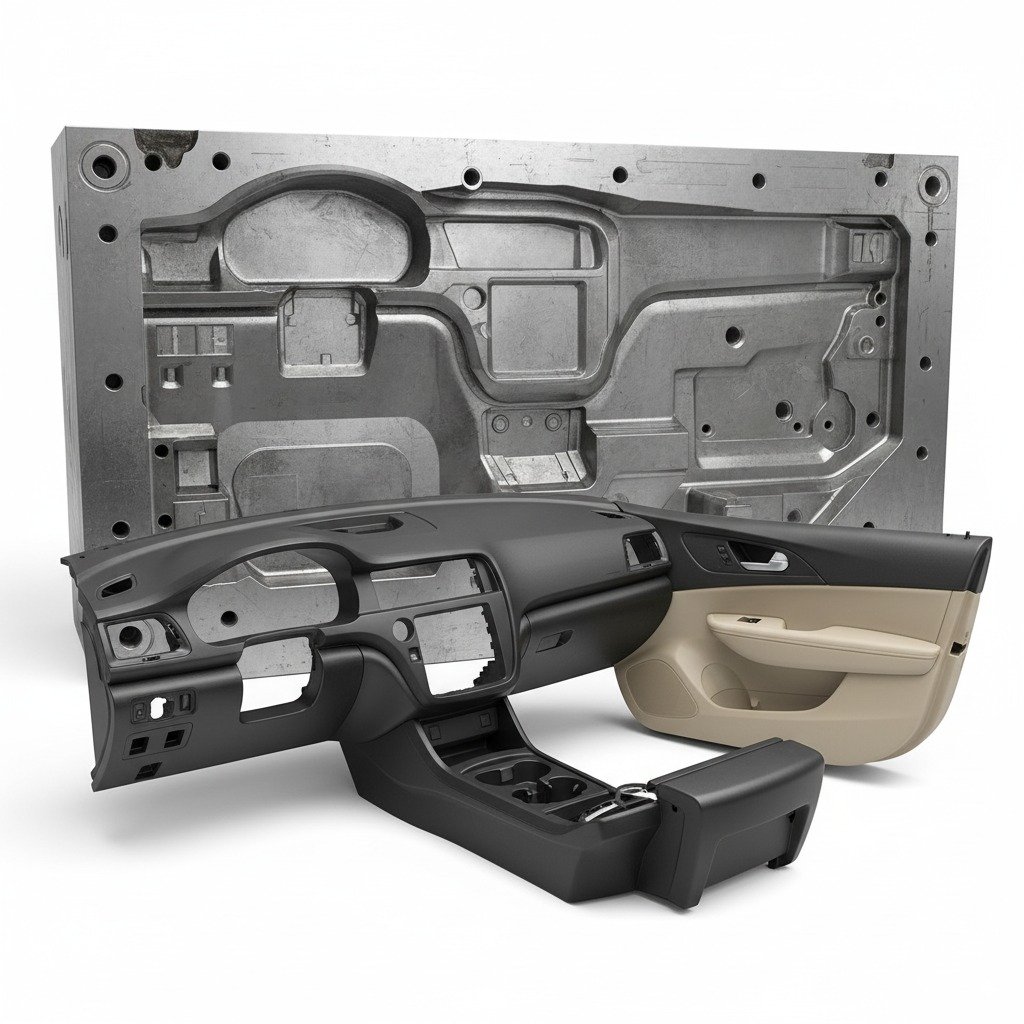
Automotive manufacturing demands reliability, efficiency, and the ability to produce complex parts at scale. Two-plate molds remain one of the most effective tooling solutions for producing high-quality automotive components.
A two-plate mold is simple in structure yet strong in performance. It consists of a stationary plate and a moving plate, making it robust, easy to maintain, and cost-effective for medium to high production runs. For parts like bumpers, dashboards, and under-the-hood components, a two-plate mold offers the perfect balance between durability and production efficiency.
One of the primary advantages is cycle time optimization. The design allows for quicker ejection and reduced cooling times, which translates into faster overall production. The compatibility with a wide range of materials—ABS, PP, PA—means that designers and engineers have the freedom to choose the most suitable resin for each part.
In the competitive automotive sector, consistency and durability matter. Two-plate molds can achieve millions of cycles over their lifespan with minimal wear, keeping production lines running smoothly. They also handle larger part sizes better compared to three-plate molds.
When sourcing a two-plate mold, it’s important to work with a manufacturer experienced in automotive standards. Look for those who can meet strict tolerances, offer mold flow analysis, and ensure ISO-certified processes.
By choosing the right two-plate mold, automotive manufacturers can boost production efficiency, maintain consistent quality, and reduce long-term tooling costs. For high-demand automotive parts, this classic mold design remains one of the most trusted solutions.