
What are the introductions about injection molds?
Feeling overwhelmed by the technical jargon of plastic manufacturing? It seems complex, but I'm here to break it down for you. It's simpler than you think.
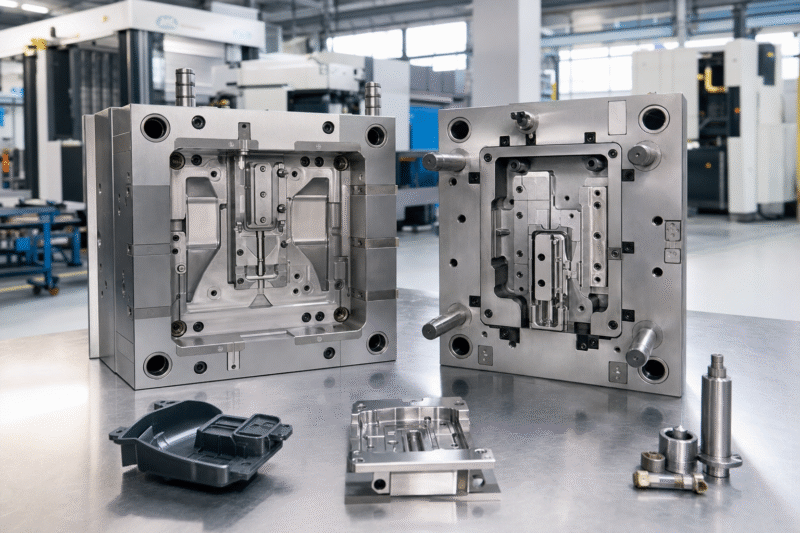
Injection molds are the main tools used to make most plastic products, over 70% of them globally. A mold has two halves: a fixed side and a moving side. They close to form a hollow space, or cavity. Hot plastic is forced in, cools down, and the finished part comes out.
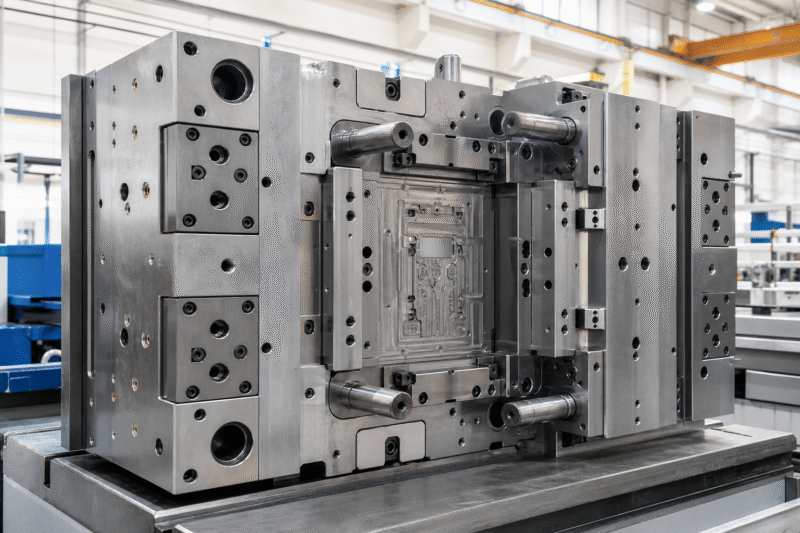
Now that you have the basic idea, let's look a little closer. A standard injection mold seems complicated, but it's really just a team of systems working together. I remember when I first started in this business, the list of systems was intimidating. But once I understood that each one does a specific job, it all clicked. A complete mold is made up of eight main systems. These include the gating system, which is the path for the plastic to flow, and the forming system, which is the cavity that shapes the part. Then you have the guiding system to align everything perfectly, and the ejection system to push the part out. To manage the process, there's a cooling system, a venting system to let air escape, a core-pulling system for complex shapes, and a temperature control system. When all these work together, you get stable, repeatable production. A good mold, made from quality steel and maintained well, can last from 300,000 to a million cycles. Here at Xsuper Mold, we've even seen our best molds push past 2 million shots with proper care. It all comes down to good design and good maintenance.
What's the story with A.B. Plastic Injectors?
Have you ever wondered why some custom plastic parts cost more from one supplier than another? It's not always about quality. It's often about different business philosophies and specialization.
A.B. Plastic Injectors is a classic example of a specialized, family-owned Australian molder. These companies often focus on niche markets like medical or agricultural parts, delivering high quality and stable lead times. Their model values expertise and customization over mass-production scale.
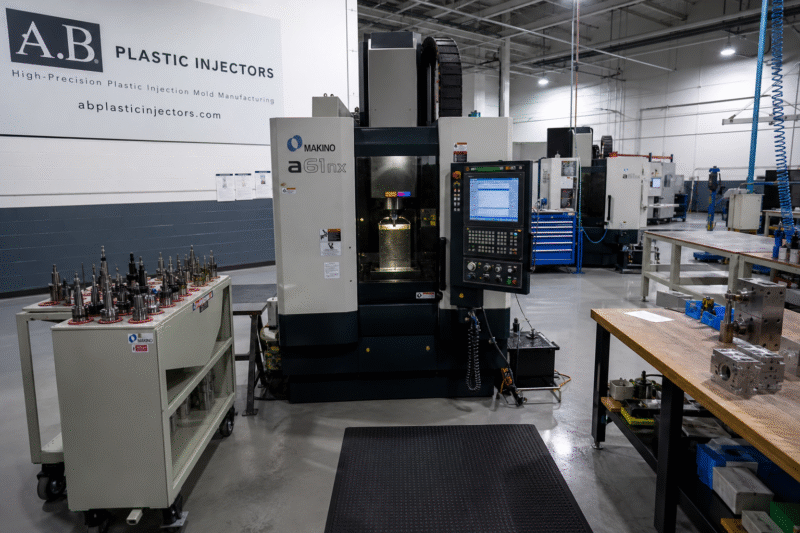
I've worked with companies all over the world, and I've seen two main approaches to injection molding. There's the high-volume, scale-focused model that is common in many parts of Asia, and then there's the specialist model you see with companies like A.B. Plastic Injectors, which is more typical in Europe, North America, and Australia. These smaller, often family-run businesses have been passed down through generations. They might only focus on one thing, like medical device components or high-performance electrical connectors, but they know that one thing better than anyone else. Because they aren't competing on sheer volume, they focus on delivering impeccable quality, reliable delivery schedules, and deep engineering support. Of course, this specialized service comes at a higher unit price. At Xsuper Mold, we've tried to build our business by combining the best of both worlds. We have the modern equipment and efficiency of a large-scale manufacturer, but we provide the dedicated engineering and project management you’d expect from a specialist.
The Specialist Model vs. The Scale Model
Let's break down the key differences between these two approaches.
| Feature | Specialist Model (e.g., A.B. Plastic Injectors) | Scale Model (High-Volume Factories) |
|---|---|---|
| Focus | Niche markets (Medical, Aerospace, etc.) | Mass markets (Consumer goods, Packaging) |
| Strengths | High quality, deep expertise, stable lead times | Low unit cost, high capacity, speed |
| Volume | Low to medium volume production | High to very high volume production |
| Pricing | Higher unit price | Very competitive unit price |
| Customer Relationship | Partnership, deep collaboration | Transactional, supplier-based |
Which are the best molds for making chocolates?
Thinking about making chocolates and want that perfect, professional shine? The type of mold you use is the secret ingredient that many people overlook. It makes a huge difference.
The best molds for making professional-quality chocolates are typically made from rigid, clear polycarbonate. This material gives chocolates a brilliant glossy finish and is extremely durable. For home use or complex shapes, flexible silicone molds are also a great option because they make de-molding very easy.
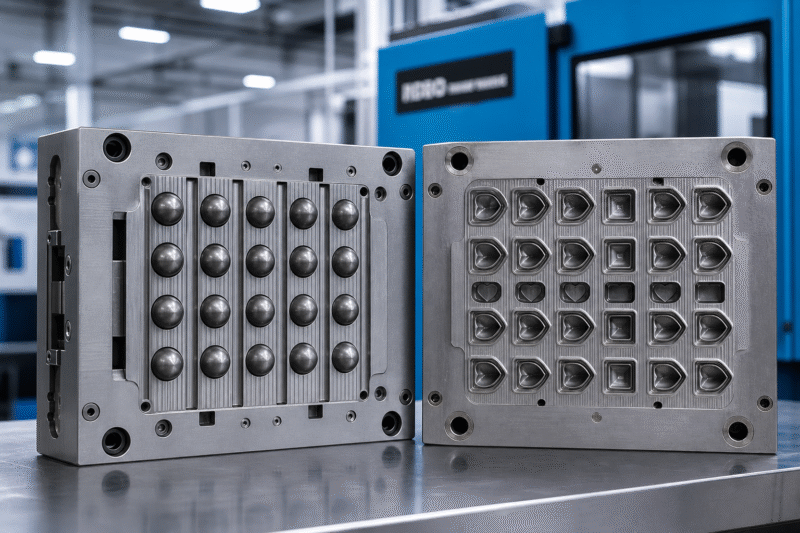
It's interesting how often this question comes up. While my work at Xsuper Mold is all about high-pressure injection molding for industrial plastics, the core principles of toolmaking are universal. Whether you're molding a car part or a piece of chocolate, the goal is to create a perfect cavity that transfers the desired shape and finish to the material. For chocolates, the two champions are polycarbonate and silicone. Polycarbonate is the choice of professional chocolatiers. It's super smooth, which is what gives the chocolate that attractive, glossy surface. It's also very rigid, so you can tap it on the counter to remove air bubbles without it flexing. Silicone molds are the opposite. They are soft and flexible, which is fantastic for releasing intricate shapes without breaking them. They don't provide the same high-gloss finish, but they are incredibly easy to use and clean. The choice really comes down to whether you prioritize that professional sheen or ease of use. This parallels how we choose steel for our plastic molds. For a clear, optical part, we use a highly polished, hardened steel like S136. For a simple internal part, a standard P20 steel is perfectly fine. The tool must always match the job.
What is Large Part Injection Molding?
So you need to manufacture a big plastic item, like a trash bin or a panel for a car? A standard molding machine just won't do the job. You've entered the world of large part injection molding.
Large part injection molding is the process for making big, single-piece plastic components. It demands injection molding machines with high clamping force (tonnage) and very large, heavy molds to handle the massive amount of plastic material and pressure needed to fill the part.
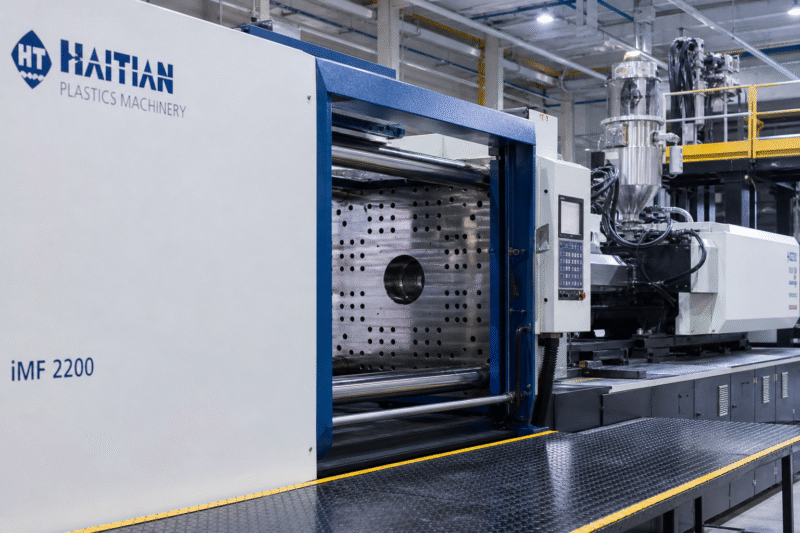
Making large parts is a completely different challenge than making small ones. It's not just about having a bigger machine; the entire process is more complex. At Xsuper Mold, our machines go up to 600 tons, which allows us to handle a good range of large-sized projects. I remember a project we did for an industrial housing. The part was almost a meter long and had complex features. The first challenge was the mold itself. It was massive and heavy, requiring special equipment to move and install. Then, we had to figure out how to get the plastic to fill the entire cavity evenly without freezing off prematurely. We ran dozens of Moldflow simulations to optimize the gate locations and flow parameters. If you get it wrong, you end up with ugly weld lines or parts that aren't fully formed. Cooling is another huge hurdle. A large mass of hot plastic takes a long time to cool, and if it cools unevenly, the part will warp and twist into a useless shape. We had to design an intricate network of cooling channels throughout the mold to control the temperature with high precision. It takes a lot of engineering to get it right.
How to Use 3D Printing for Injection Molding?
Need to test your new product design with real materials, but don't want to spend a fortune on a steel mold just for prototypes? This is where 3D printing can be a powerful tool.
3D printing is used to create rapid prototype molds for injection molding. These molds, often made from durable photopolymers, are used for very low-volume runs (usually 10-100 parts). This allows for quick design validation with production-grade plastics before committing to expensive steel tooling.
This technology has really changed how we approach product development. In the past, if a client wanted to test a design, the only option was to build a "prototype mold" out of aluminum or soft steel. It was faster and cheaper than a production mold, but it still took weeks and cost thousands of dollars. Now, we can 3D print a mold insert in a day. We fit this printed insert into a universal steel mold base, put it in the injection molding machine, and we're ready to go. This process is perfect for that early validation stage. We can shoot a small batch of, say, 50 parts using the actual plastic the final product will be made from, like ABS or polycarbonate. The client gets functional parts they can hold, test, and assemble. We get priceless data on how the plastic flows into the mold, where potential issues might be, and how the part behaves as it cools. It’s a fast, low-cost way to identify and fix design flaws. Of course, a 3D printed mold won't last long. The heat and pressure will wear it out quickly. But for making a handful of parts to prove a concept, it is an absolutely invaluable tool.
Conclusion
From basic mold structures to specialized manufacturing and new technologies, the world of injection molding is always evolving. Understanding these options helps you create better products faster.