
What is the main function of a plastic mold?
You see plastic parts everywhere, from your car's dashboard to your coffee maker. Have you ever wondered how they are all made with such perfect consistency?
The main function of a plastic mold is to give molten plastic its final shape. It is a custom-made tool, typically from steel, with a cavity that is the exact negative of the part you want to create. Hot plastic is forced in, cools down, and the solid part comes out.
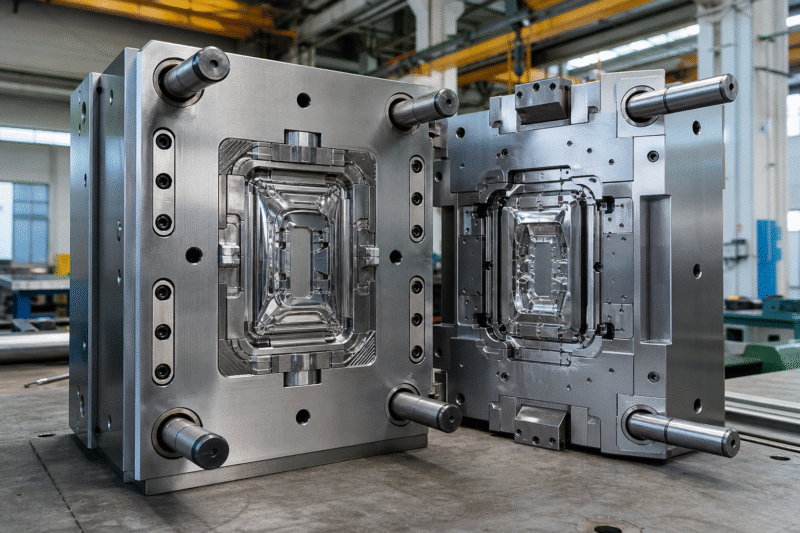
Think of it like a very advanced, reusable cookie-cutter, but for hot plastic. The mold is the heart of the entire operation, defining the size, shape, texture, and overall quality of every single piece. But a mold can't do this job alone; it needs a powerful partner to bring it to life. To really understand the process, we have to look at the machine that powers the mold.
What is a Molding Machine?
You have a perfect mold, but it's just a block of steel. How do you get plastic into it? Using the wrong equipment can damage your expensive mold or produce garbage parts.
A molding machine is the engine that drives the plastic manufacturing process. It melts plastic resin, injects it into the mold with immense force, holds the mold shut as the plastic cools, and then opens it to release the finished part. The term covers many types, like injection, blow, and extrusion machines.
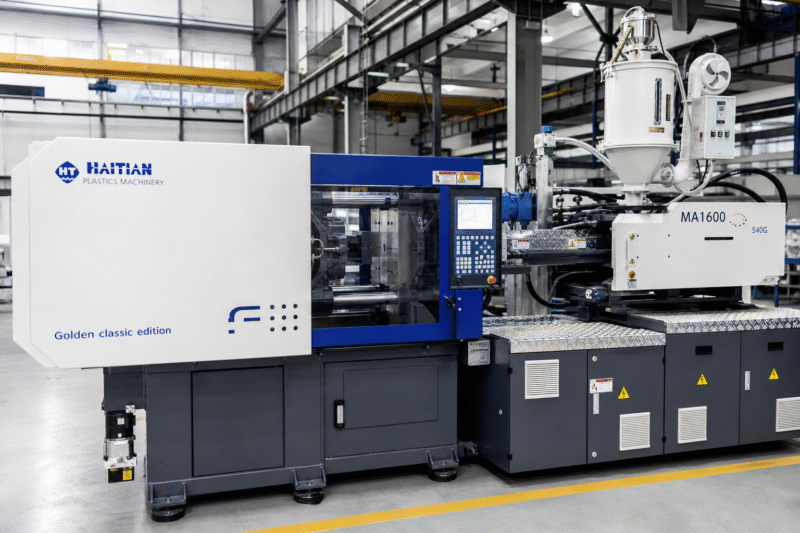
The term "molding machine" is pretty broad. It can mean an injection molding machine, a blow molding machine for bottles, or an extrusion machine for pipes. For most solid parts, we use an injection molding machine. When I help a client pick a machine, I tell them to focus on three key numbers. These are the most important specs to get right.
Key Machine Parameters
The three main parameters you need to know are clamping force, injection volume, and opening stroke. Getting any of these wrong can be a costly mistake. Clamping force tells you how big of a part you can make. Injection volume tells you how much plastic you can push in one shot. Opening stroke tells you how deep your part can be and still get out of the mold.
Here’s a simple table to break it down:
| Parameter | What It Means | Why It Matters |
|---|---|---|
| Clamping Force (Tons) | The force holding the mold shut during injection. | Too little force, and the mold will flash (plastic leaks out). Too much is wasteful. |
| Injection Volume (Grams/Ounces) | The maximum amount of plastic the machine can inject in one cycle. | Must be larger than the weight of your part plus the runner system. |
| Opening Stroke (mm/inches) | How far the machine can open the mold. | Must be long enough for your finished part to be ejected without getting stuck. |
The biggest mistake I see beginners make is buying a machine that is way too big. I remember a new company that bought a huge 500-ton machine to make a small electronic casing that weighed only 20 grams. They thought bigger was better. The reality was that their electricity bill was massive, and the machine was incredibly inefficient for such a small part. We moved their mold to a 90-ton machine, and their cost per part dropped by more than half. Don't pay for power you don't need.
What are the different types of Plastic Molds?
You might think a mold is just a mold. But using the wrong kind can destroy your product's finish, slow down production, and cost you a fortune in wasted material.
Plastic molds are categorized in two main ways: by their use and by their structure. By use, there are molds for automotive, medical, packaging, and industrial parts. By structure, there are two-plate, three-plate, and hot runner molds, each designed for different part complexities and production needs.
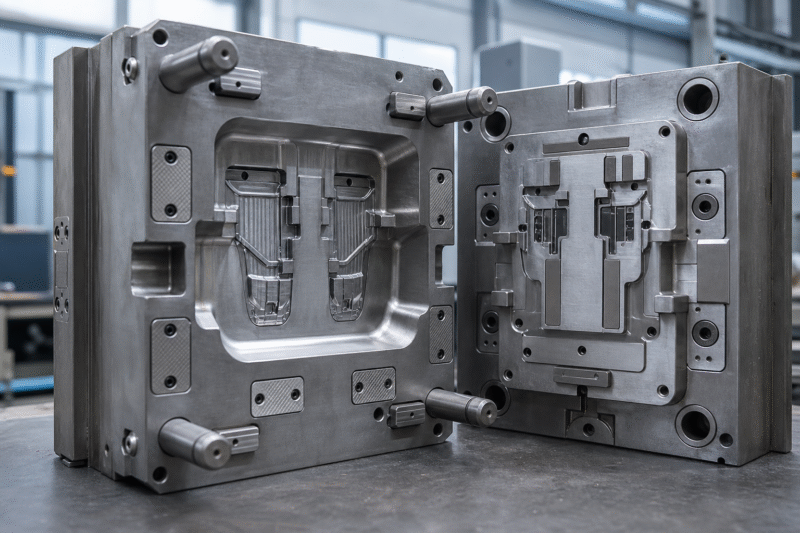
When we talk about molds at my company, Xsuper Mold, we first think about what the mold will be used for. A mold for a car bumper is very different from a mold for a tiny medical connector. The industry often defines the requirements for precision, material, and lifespan. For example, automotive molds need to handle millions of cycles, while a prototype mold might only need to make a few hundred parts.
The structure of the mold is where the real engineering comes in. The simplest is a two-plate mold. It has two halves, the cavity and the core, and it's great for simple parts. A three-plate mold is a bit more complex and is useful when you need to place the injection gate in the center of a part.
But these days, the hot runner mold is the star of the show. A hot runner system is basically a heated manifold inside the mold that keeps the plastic molten all the way to the part cavity. This means there is no "runner" (the plastic channels that lead to the part) to break off and throw away. This saves a huge amount of material. It also results in a much cleaner-looking part without a big gate mark. The downside is the cost. A hot runner system alone can add thousands, or even tens of thousands, of dollars to the price of a mold. But for high-volume production of consumer-facing products, it's almost always worth the investment.
What are Plastic Craft Molds?
When you hear "plastic mold," you probably picture a huge factory with giant machines. But what if you just want to make a few custom keychains or soap bars at home?
Plastic craft molds are simple, flexible molds usually made from silicone, polyurethane, or soft plastic. They are designed for hobbyists and small-scale creators to cast materials like epoxy resin, plaster, wax, or soap at room temperature. They are not suitable for industrial high-pressure injection molding.
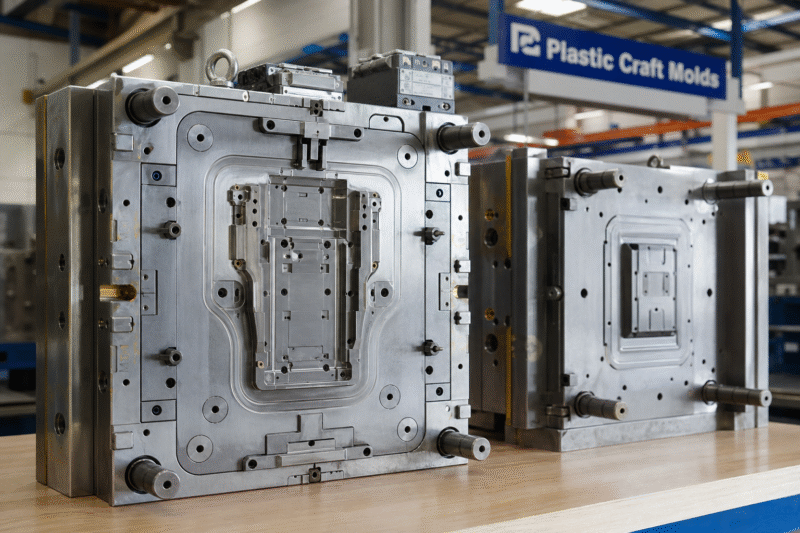
I often get calls from entrepreneurs and hobbyists asking if we can build them a mold for a few hundred dollars. This is where I have to explain the huge difference between an industrial mold and a craft mold. The tools are made for completely different worlds. An industrial mold, like the ones we build, is a heavy-duty tool made from hardened steel. It's designed to withstand immense pressure and heat and can produce millions of identical parts with incredible precision.
A craft mold, on the other hand, is all about accessibility and ease of use. You can buy them for a few dollars online. They are typically made of flexible silicone, which makes it easy to pop the finished creation out without any special equipment. You pour a liquid material like epoxy resin into them and just let it cure. You can't put a silicone mold into a 300-ton injection molding machine—it would be destroyed instantly. Craft molds are perfect for making things like custom jewelry, decorative soaps, candles, and detailed figurines. They are fantastic tools for artists and DIY enthusiasts, but they are not part of the industrial manufacturing process.
How do you make a hard plastic mold?
You have a great idea for a new product, and you know you need a custom plastic part. The mold is the key, but making one seems like a secret art known only to a few.
Making a hard plastic mold is a high-precision engineering process. It starts with a 3D CAD design. Then, large blocks of steel are precisely shaped using CNC machines, EDM, and grinders. Finally, all the components are hand-assembled, polished, and tested to ensure perfection.
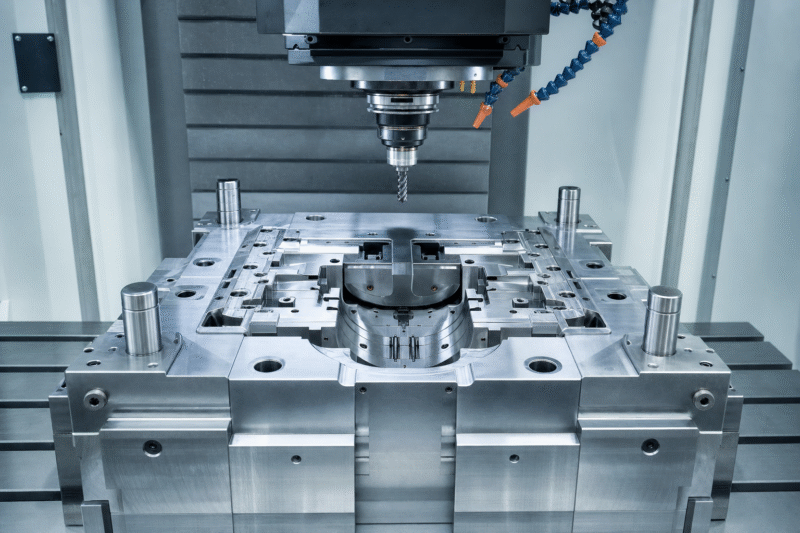
Making a professional injection mold is a multi-step process that requires expensive machinery and highly skilled people. It's not something you can do in a garage workshop. Here’s a simplified look at how we do it.
First comes the design. It all starts with the 3D model of the customer's part. Our engineers analyze it using special software to make sure it's designed for manufacturability (DFM). We look for potential problems that could make molding difficult. Then, we design the entire mold around the part, including the cooling channels, ejector system, and runners.
Next is the machining. This is where we cut steel. We use computer-controlled (CNC) milling machines to carve out the main shape of the mold's core and cavity. For very fine details or sharp internal corners that a milling tool can't reach, we use a process called Electrical Discharge Machining (EDM). It uses electrical sparks to erode the steel with extreme accuracy.
After all the pieces are machined, they go to assembly. A skilled mold maker carefully fits everything together. This includes the core and cavity, but also dozens of other parts like ejector pins, sliders for undercuts, and the cooling fittings. The surfaces that will form the final part are often polished by hand to a mirror finish.
The final step is testing. We put the finished mold into one of our injection molding machines and do a trial run, which we call T1. We shoot plastic into it and carefully inspect the first sample parts. We measure every dimension and look for any tiny flaws. If any adjustments are needed, we make them before starting mass production.
Conclusion
A plastic mold is the essential tool that shapes our world. It works with a molding machine to turn raw plastic into the finished products we use every day.