
Why Injection Mold Costs Vary: A Transparent Breakdown of Tooling Costs?
You received wildly different quotes for the same injection mold. Now you're confused, and you are worried about choosing the wrong partner. I will break down what drives these costs.
An injection mold's cost varies due to the steel type, number of cavities, part complexity (undercuts, textures), and required precision. These factors directly impact machining time, labor, and the tool's lifespan, determining the final price and overall return on investment.
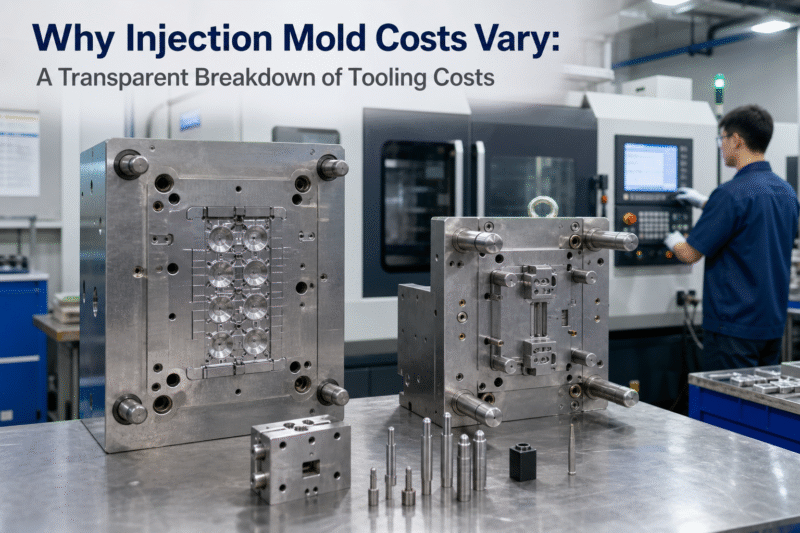
I have seen countless clients get stuck here. They focus only on the initial price tag, but that is a mistake. The cost of an injection mold isn't a single price point but a reflection of strategic trade-offs. The real question isn't "how much does a mold cost?" but "which mold configuration offers the best ROI for my specific production volume, product complexity, and required lifespan?" Let's dig into the details so you can make an informed decision and invest your money wisely.
Mold steel and cavity count: where the money goes?
Choosing mold steel and cavity count feels like a guess. You want to save money but also need high volume. It's a tough balance that can wreck your budget if you get it wrong.
Hardened tool steels like H13 or S136 cost more upfront but last for millions of cycles. Softer, pre-hardened steels like P20 are cheaper but wear out faster. More cavities increase output per cycle but make the mold larger, more complex, and significantly more expensive to build.
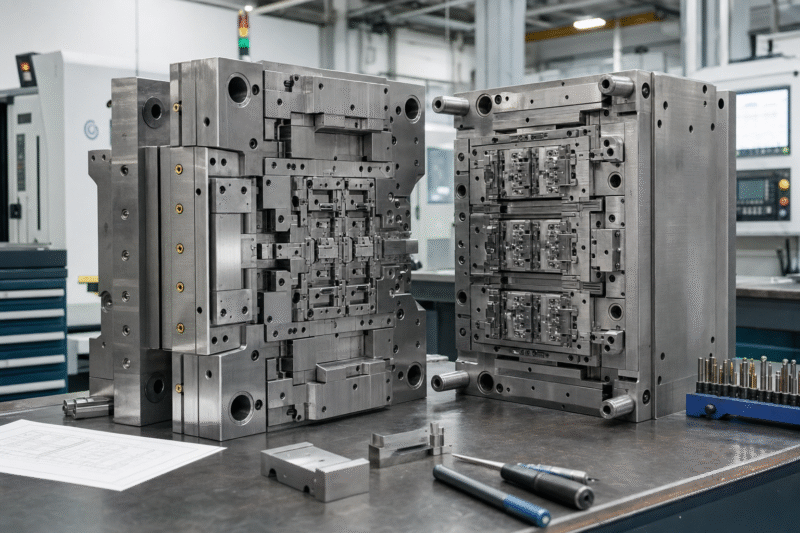
These two factors are the biggest drivers of your initial tooling cost. I always think of mold steel as the foundation of a house. You can build on a cheaper foundation, but you shouldn't be surprised when problems appear down the line. We match the steel to the project's needs. For a prototype mold that only needs to make 5,000 parts, a softer aluminum or P20 steel is perfect. It's easier to machine, which saves time and money. But for a high-volume production part that will run for years, we insist on using hardened tool steel. It's tougher to machine and requires heat treatment, but it will reliably produce millions of quality parts without wearing out.
Steel Type vs. Mold Lifespan
| Steel Type | Hardness (HRC) | Typical Mold Lifespan (Shots) | Best For |
|---|---|---|---|
| P20 | 28-32 HRC | 50,000 – 400,000 | Low to medium volume, larger parts. |
| NAK80 | 38-42 HRC | 300,000 – 800,000 | High-polish finishes, medium-high volume. |
| H13 | 48-52 HRC | 500,000 – 1,000,000+ | High volume, abrasive materials, die casting. |
| S136 | 48-52 HRC | 1,000,000+ | Optical parts, medical parts, corrosive plastics. |
Cavity count is about production efficiency. A single-cavity mold makes one part per cycle. An eight-cavity mold makes eight parts in roughly the same time. The eight-cavity mold will cost much more to build, but your per-part price will be a fraction of the single-cavity tool. The decision depends entirely on your total production volume.
Why cheap tooling often costs more later?
That low-cost mold quote looks so tempting. But what if it leads to constant repairs, bad parts, and production delays? That initial saving can quickly disappear, hurting your project and your reputation.
Cheap tooling often uses inferior steel, has a poor cooling design, and lacks precision. This leads to frequent downtime for repairs, inconsistent part quality, and a shorter mold lifespan. The costs of lost production and rejected parts quickly add up, exceeding the initial savings.
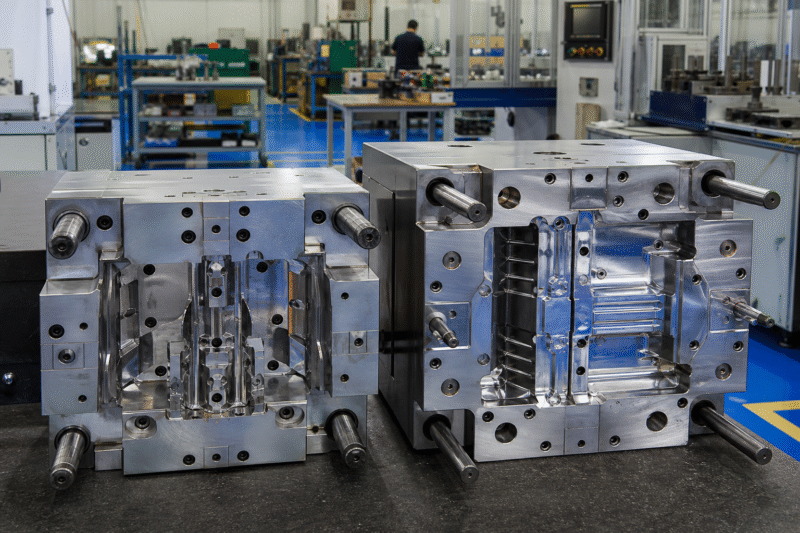
We once had to rescue a project where a client went with a rock-bottom quote from another supplier. The mold arrived and couldn't even run for a full day without issues. It was constantly being pulled from the press for repairs. Flash on the parts was so bad that they had to pay someone to trim every single piece by hand. Their "cheap" mold ended up costing them thousands in lost time and labor. A well-made tool is an investment in stability. It runs consistently, day in and day out, producing good parts with minimal downtime. The cooling channels are designed for efficiency, which means shorter cycle times. A few seconds saved on every part can add up to huge savings in machine time over a production run of 100,000 parts. A cheap tool, by contrast, is a constant problem. It leaks, it flashes, components break, and the part quality is all over the place. The money you save upfront is quickly eaten up by maintenance costs, high scrap rates, and production delays.
How tolerances, textures, and lifter actions change price?
Your part has a special texture, tight tolerances, and an undercut. These features are essential, but now your mold quotes are soaring. You don't know why these simple details cost so much.
Tight tolerances require high-precision machining like Wire EDM and CMM inspection, which is slow and expensive. Surface textures need chemical etching or laser engraving. Undercuts require complex mechanisms like lifters or slides, adding moving parts that increase the mold's design and build time significantly.
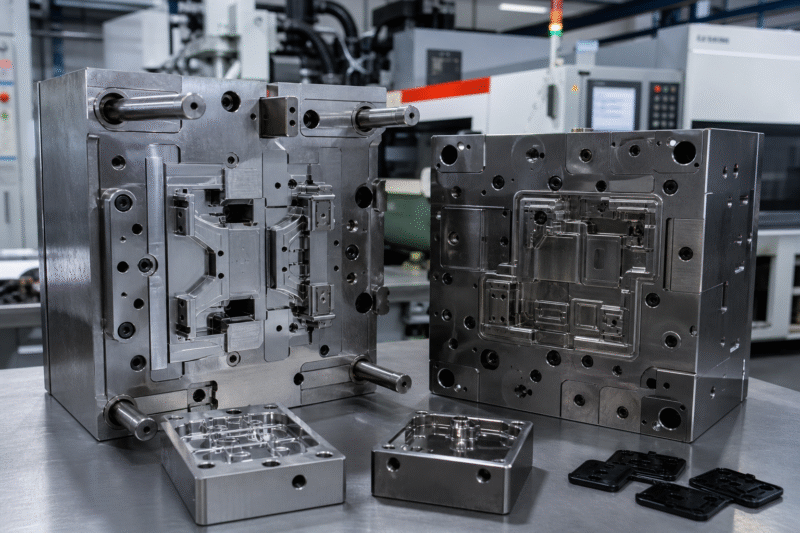
These features add layers of complexity, and complexity directly translates to time and cost. Standard machining can hold a tolerance of about +/- 0.1mm. If your part needs a tolerance of +/- 0.02mm for a critical fit, we can't use a standard CNC mill. We have to use a much slower and more precise process like Wire EDM or a precision grinder. Then, we have to spend more time in our quality lab with a CMM machine to verify the dimensions. Textures also add a step. A simple bead-blast finish is easy, but if you want a specific leather grain, that requires sending the mold component to a specialist for chemical etching. This adds cost and lead time. The biggest driver of complexity, however, is undercuts. An undercut is any feature that prevents the part from ejecting straight out. To release these features, we have to build mechanisms like sliders or lifters into the mold. These are moving parts that have to be timed perfectly and built to last for hundreds of thousands of cycles without failing. It’s like building a small machine inside of your mold.
Questions to ask before comparing mold quotes?
You have three quotes for the same mold, and the prices are all over the place. How can you compare them fairly? Choosing the wrong one could mean disaster for your project's timeline and budget.
Ask about the mold steel type (e.g., P20, H13), the mold's guaranteed lifespan in shots, the number of cavities, the type of runner system (hot or cold), and what DFM (Design for Manufacturability) analysis is included. This ensures you are comparing equivalent tools.
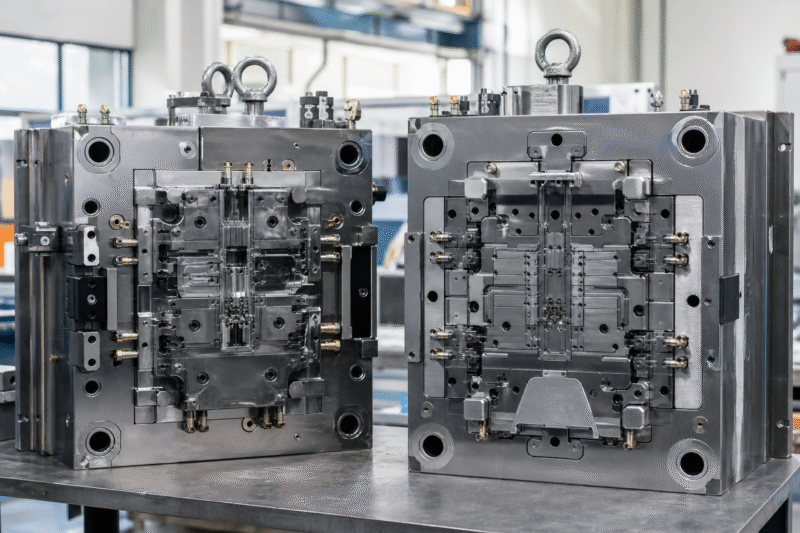
I always tell my clients to treat this like buying a car. You can't just compare the price of a 'sedan'; you need to know the engine, the features, and the warranty. Comparing mold quotes based on price alone is a recipe for failure because you don't know what you are actually buying. To make a true apples-to-apples comparison, you need to ask for more details. A professional mold maker will be happy to provide this information. Here is a simple checklist of questions to ask every potential supplier before you make a decision:
- What specific type of steel will be used for the core and cavity?
- What is the guaranteed shot life of the mold? (e.g., 500,000 cycles)
- What mold base standard will be used (e.g., LKM, DME, HASCO)?
- Will the mold use a hot runner or cold runner system?
- Is a formal DFM (Design for Manufacturability) report included with the quote?
- How are the cooling channels designed and are they optimized?
Getting answers to these questions will reveal the true value behind the price. It helps you see which quote is for a high-performance tool built for the long haul and which is for a short-term, low-quality solution.
Conclusion
The right mold isn't the cheapest one; it's the one with the best ROI. Understand these cost factors, ask the right questions, and choose a partner for long-term success.